LLM optimization is the practice of structuring blog content so AI answer engines can read, extract, and cite it. Traditional SEO gets a page ranked.
LLM optimization gets a page quoted inside ChatGPT, Perplexity, Gemini, and Google AI Overviews. The difference decides whether a brand appears in AI-generated answers or disappears from them.
This guide breaks down a 9-point checklist to optimize blog content for LLMs. Understanding why B2B content strategy is shifting in 2026 sets the foundation for each step.
The B2B Content Shift: Why AI Optimization Matters in 2026
The B2B content shift is the movement of buyer research from search engine results pages into AI-generated answers. Buyers no longer scan ten blue links. They ask ChatGPT, Perplexity, or Google AI Overviews and act on the synthesized response.
The data confirms how far this shift has gone. According to Forrester's Buyers' Journey Survey of nearly 18,000 global business buyers, 94% now use AI during their buying process. Twice as many buyers named generative AI as their most meaningful information source, ahead of vendor websites, product experts, and sales reps.
Traditional organic traffic is shrinking at the same time. When an AI summary appears, users click a search result only 8% of the time, down from 15% without one. A deeper breakdown of this behavior change is covered in how AI is changing search behavior.
The implication for content teams is direct. A blog post that ranks but never gets cited is invisible to most of the buying journey. Visibility now depends on whether an AI engine can extract, trust, and attribute the content.
Winning citations starts with understanding the mechanics. The next section breaks down exactly how LLMs read, evaluate, and select blog content to cite.
How Do LLMs Actually Analyze And Cite Blog Content?
LLMs read blog content by breaking pages into small chunks, extracting direct answers, and matching them to user prompts. An AI engine does not rank a page the way Google ranks a URL. It pulls the clearest, most self-contained passage that answers the question and cites its source.
Three factors decide whether a passage gets picked:
- Extractability: The answer must be complete within two or three sentences. It should make sense without any surrounding context.
- Trust signals: Verifiable stats, named sources, and consistent entity references make content safer to cite.
- Structure: Headers, tables, and bullets help retrieval systems locate the exact answer fast.
The engines also differ in how they source and cite content:
A page can win citations on one engine and stay invisible on another. This is why ranking in AI Overviews follows its own playbook.
Every rule in the checklist below exists because of how these retrieval systems parse a page. The 9 steps that follow turn these mechanics into repeatable actions.
9-Step Blog Optimization Checklist For LLMs
A blog optimization checklist for LLMs is a set of on-page actions that make content easy for AI engines to extract, verify, and cite. Each step targets a specific way retrieval systems read a page. No rebuild needed, every step can be applied to an existing post in one editing pass.
1. Convert Every Header Into A Wh-Question Or Entity Statement

Headers act as retrieval anchors for AI engines. A header phrased as a question matches the conversational prompts buyers actually type.
Convert each H2 and H3 into one of two formats. Either a Wh-question starting with What, How, or Why. Or a clear entity-based statement that names the subject directly.
For example, replace "Benefits" with "What Are the Benefits of Patch Management?" The question format mirrors the prompt, so the engine maps query to answer instantly.
2. Add A Key Takeaways Box Immediately After The H1
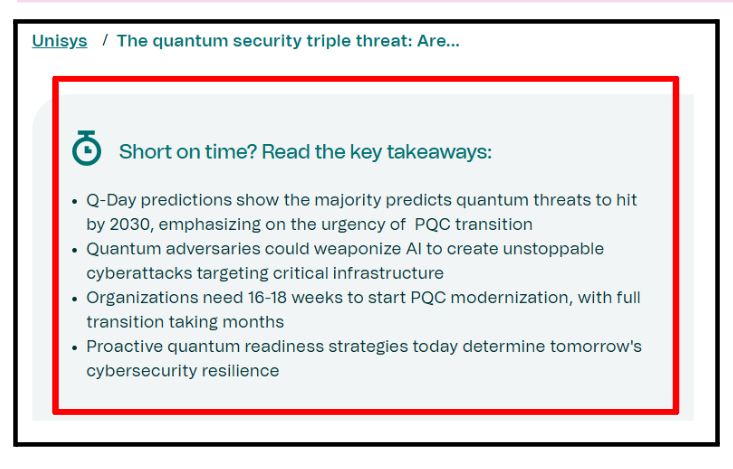
A Key Takeaways box gives AI engines a pre-summarized version of the entire article. Place it directly after the H1, before any body copy.
Keep it tight:
- Use 2 to 4 bullet points only.
- Hold each bullet to 20 to 25 words.
- Make every bullet a standalone, extractable claim.
LLMs frequently lift these summary blocks verbatim into answers. The box also helps human skimmers decide to keep reading.
3. Insert Verifiable Facts With High-Authority Source URLs
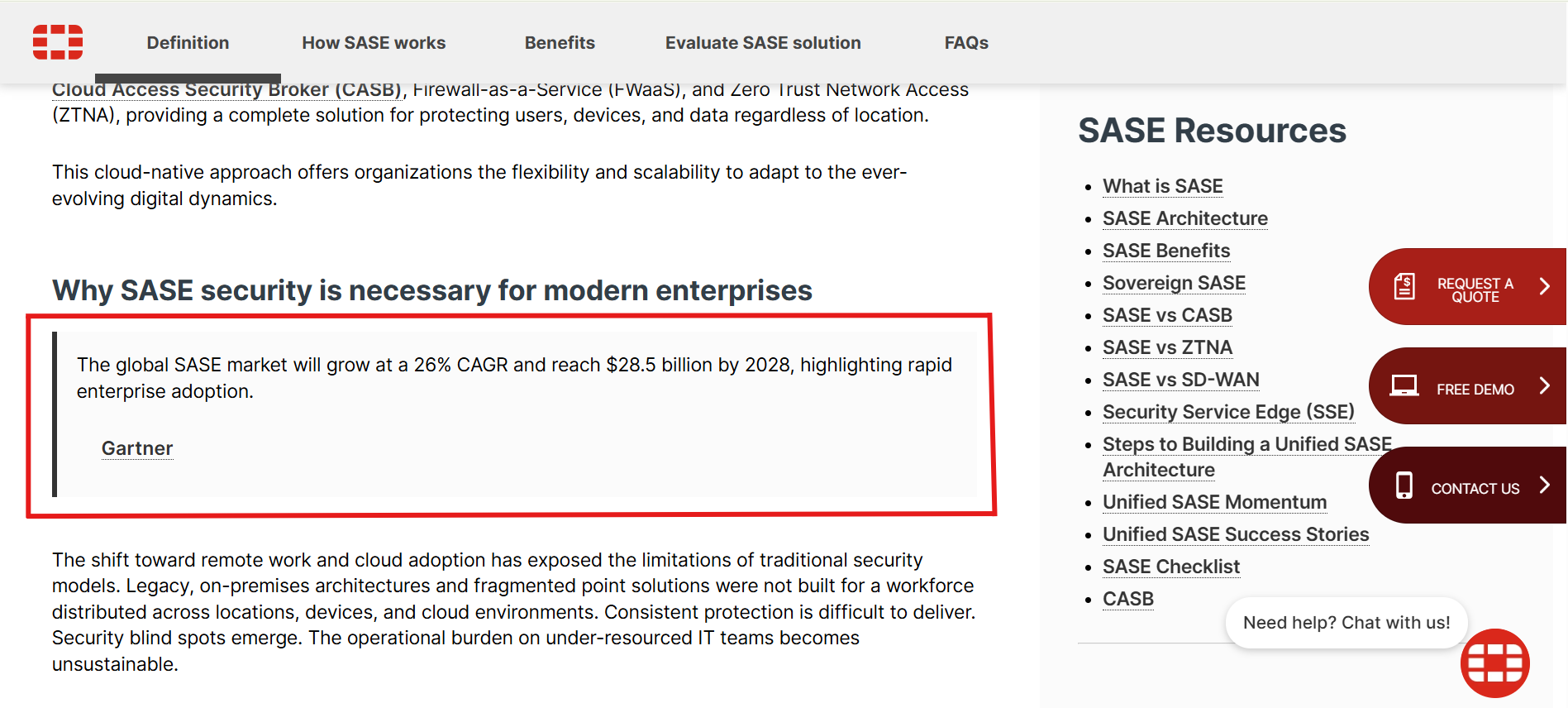
Verifiable facts are the strongest citation trigger identified in academic research. The original GEO study presented at ACM SIGKDD found that adding statistics and cited sources improved AI visibility by 30 to 40%.
Include 1 to 2 stats or facts in each major section. Link every stat to a high-authority source such as Gartner, Forrester, or peer-reviewed research. Vague claims like "many studies show" earn nothing. Specific numbers with named sources earn citations.
4. Refresh Every Year Reference to Latest Year (e.g. 2026)

AI engines treat recency as a trust signal. Outdated year references tell the engine the page is stale.
Audit three places: the H1, the body text, and the metadata. Update every year mention to 2025 or 2026. Delete or rewrite anything referencing 2024 or earlier, such as "The best tools for 2024." A quarterly freshness sweep keeps evergreen pages citable year-round.
5. Use The "X Is Y" Standardized Definition Format
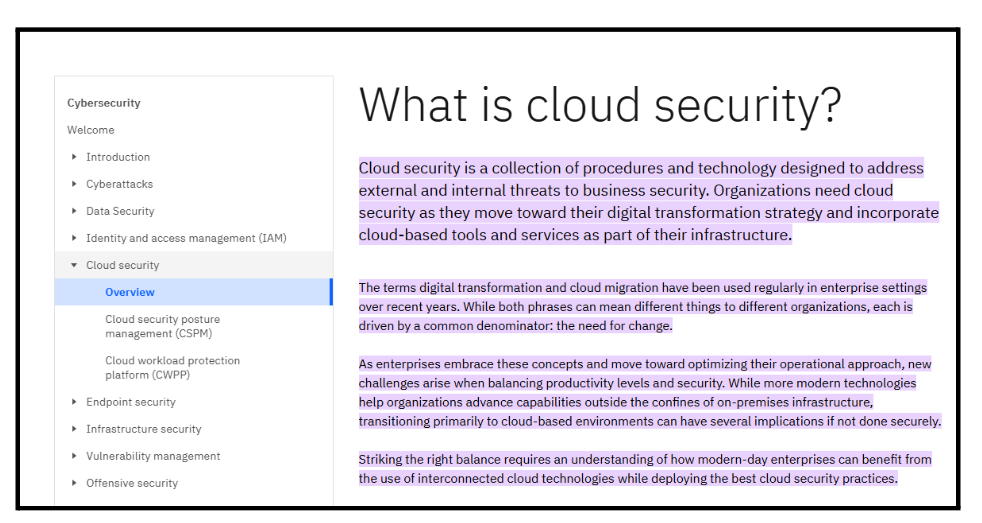
The "X is Y" format is the most extractable sentence structure for LLMs. It follows a simple pattern: [Term] + [Is] + [Standard Definition].
Open every definitional section with it. For example: "Patch management is the process of identifying, testing, and deploying software updates across systems." The sentence works without any surrounding context, which is exactly what a retrieval system needs.
6. Embed Third-Party Validation Inside Relevant H2 Sections
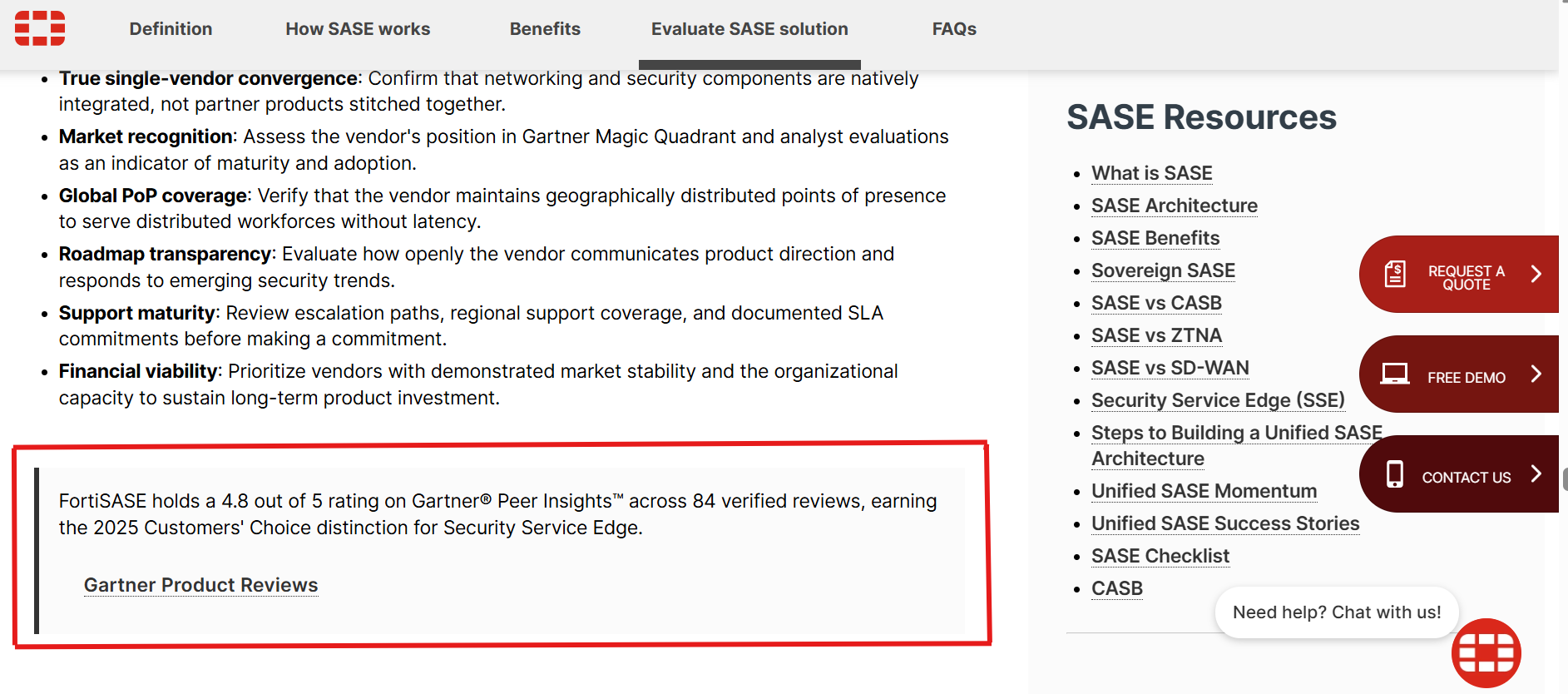
Third-party validation is proof from an independent source that the brand or product is credible. AI engines weigh these signals heavily because they cannot be self-manufactured.
Embed a validation line inside the H2 section where it is most relevant. Pull from review platforms like G2 or TrustPilot, or analyst sites like Gartner, Forrester, TechCrunch, and TechTarget.
For example: "Gartner recognized Fortinet as a Customers' Choice 2025 for Secure SD-WAN." This exact approach helped a global cybersecurity brand move from 0.6% citation share to featured AI positions.
7. Include insights from Reddit, YouTube & Analyst sites
AI engines lean disproportionately on community and analyst sources. Pew Research found Wikipedia, YouTube, and Reddit alone account for 15% of all links inside Google AI summaries.
Widen research beyond competitor blogs. Cover:
- Social sites: Reddit threads, LinkedIn discussions, YouTube videos.
- Analyst sites: Forrester, Forbes, Gartner.
- Review sites: G2, TrustPilot.
- SERP leaders: Competition and top-ranking pages for the keyword.
Content that reflects what real users debate on these platforms reads as more complete to both buyers and LLMs.
8. Keep Content Scannable With Short Sentences, Bullets And Tables
Scannable content is easier for retrieval systems to chunk and extract. Long paragraphs bury the answer.
Apply three rules to every draft. Keep each sentence under 15 to 20 words. Break any paragraph beyond 3 to 4 lines into bullet points. Look for opportunities to convert comparisons or data into tables, since tables are among the most extracted formats in AI answers.
9. Implement Schema Markup For Every Content Type
Schema markup is structured data that tells AI engines exactly what a page contains. It removes guesswork from content classification.
Match the schema to the content type. Apply Organization, Product, Review, Article, FAQ, and Breadcrumb schemas wherever each fits. FAQ schema deserves priority since question-answer pairs feed directly into AI-generated responses. Validate the markup after every page update.
LeadWalnut's LLM Content Optimization Kit packages these nine steps into a run-on-every-draft checklist, with pass and fail criteria for each point.
How To Measure the Effectiveness Of Blog LLM Optimization
Measuring LLM optimization means tracking whether AI engines cite the content, not just whether the page ranks. Traditional SEO dashboards miss this entirely. A page can hold position 3 on Google and still be invisible inside ChatGPT and Perplexity.
Track three layers of data:
- Citation monitoring: Run 10 to 20 buyer-intent prompts monthly across ChatGPT, Perplexity, Gemini, and Google AI Overviews. Log which engines cite the page, which cite competitors, and which cite neither. Dedicated ChatGPT rank tracking tools automate this across platforms and prompt sets.
- AI referral traffic: Create GA4 segments for AI sources such as chatgpt.com, perplexity.ai, and gemini.google.com. Measure engagement and conversion separately, since AI-referred visitors typically arrive with higher intent.
- Citation share vs. competitors: Track share of voice within AI answers over time. Gaining citations while competitors lose them is the clearest signal the checklist is working.
The measurement gap is also the opportunity. Only 22% of marketers currently track AI visibility, according to Yext research. Teams that build this measurement muscle now compound an advantage while most competitors operate blind.
Set a realistic timeline. Most pages show their first new citations within 6 to 12 weeks of optimization. Meaningful citation share shifts typically take 4 to 6 months of consistent work.
Consistent measurement only pays off when the checklist runs on every article, not just one. The final section covers how to turn these nine steps into a repeatable system.
Turning The Checklist Into A Repeatable LLM Visibility Engine
An LLM visibility system is a workflow that applies citation optimization to every article, not just one. A single optimized post wins a few citations. A system compounds them across the entire blog.
Three habits make the checklist repeatable. Run all nine steps on every new draft before publishing. Audit the top 10 existing traffic pages quarterly against the same checklist. Track citations monthly across ChatGPT, Perplexity, Gemini, and Google AI Overviews to see which fixes move the needle.
The teams winning AI citations in 2026 are not writing more content. They are structuring existing content the way retrieval systems read it. The nine steps in this guide are the fastest path from ranked to cited.
LeadWalnut, rated 4.2/5 on Trustpilot, runs this exact system through its B2B SaaS GEO optimization services for enterprise content teams every week. Here's what one client had to say:
“We’ve partnered with them for some time, and within 4 weeks they revamped multiple key service pages and boosted rankings for our critical business keywords with smart, revenue-driven strategies.”
Sr. Digital Marketing Manager, Splashtop — Verified Client
FAQ
Does LLM optimization affect traditional Google rankings?
No, it improves them. Answer-first structure, verifiable facts, and schema markup align with Google's quality guidelines. The same edits that win AI citations typically strengthen organic rankings rather than harm them.
What is the difference between GEO, AEO, and LLM optimization?
All three describe the same practice of earning visibility inside AI-generated answers. GEO and AEO are the common industry labels, while LLM optimization emphasizes the models. The tactics are identical across all three.
What are the best tools for LLM optimization?
Citation trackers like Profound, Otterly, and SE Ranking's AI toolkit monitor visibility across ChatGPT, Perplexity, and Google AI Overviews. GA4 segments cover measurement. Applying the checklist itself stays a manual editorial process.
How much does LLM optimization cost?
Applying the 9-step checklist costs only editorial time. Tracking tools range from roughly $65 to $500+ monthly based on prompt volume. Enterprise agency programs price similarly to standard SEO retainers.
When should a company invest in LLM optimization?
Now, if buyers research the category through AI tools, which covers most B2B software in 2026. Citation authority compounds, so brands cited early become progressively harder for competitors to displace.


How can LeadWalnut help?

Related Articles
Why Backlinks Are Now The Primary Driver Of Brand Mentions In AI Answers
AI Content Creation That Search Engines And LLMs Trust