Buyers no longer scroll through ten blue links. They ask ChatGPT which vendors to shortlist. They read Google's AI Overview and skip the click.
Rank trackers cannot measure this. They show your position. They do not show whether an AI engine cited you or named a competitor instead.
AI search optimization tools close that gap. For B2B SaaS teams, absence from AI answers means absence from the shortlist.
Here are 5 tools worth your budget in 2026.
Why AI Search Optimization Matters in 2026
Search behavior has shifted. Buyers now get their answer inside the results page and move on without clicking.
Gartner projects that search engine volume will fall 25% by 2026 as buyers turn to AI chatbots and virtual agents.
Enterprise buyers rarely rely on a single channel. They move between ChatGPT, Perplexity, and Google AI Overviews across one research cycle. Each engine pulls from different sources. This is why GEO has become a core discipline for B2B SaaS teams.
For B2B SaaS companies, AI search optimization delivers three outcomes:
- Protected organic visibility as traditional click volume declines
- Authority across AI platforms, built by structuring content that engines can cite
- Qualified traffic from buyers who arrive already informed
5 Tools That Track and Improve AI Search Visibility
1. Semrush AI SEO Toolkit
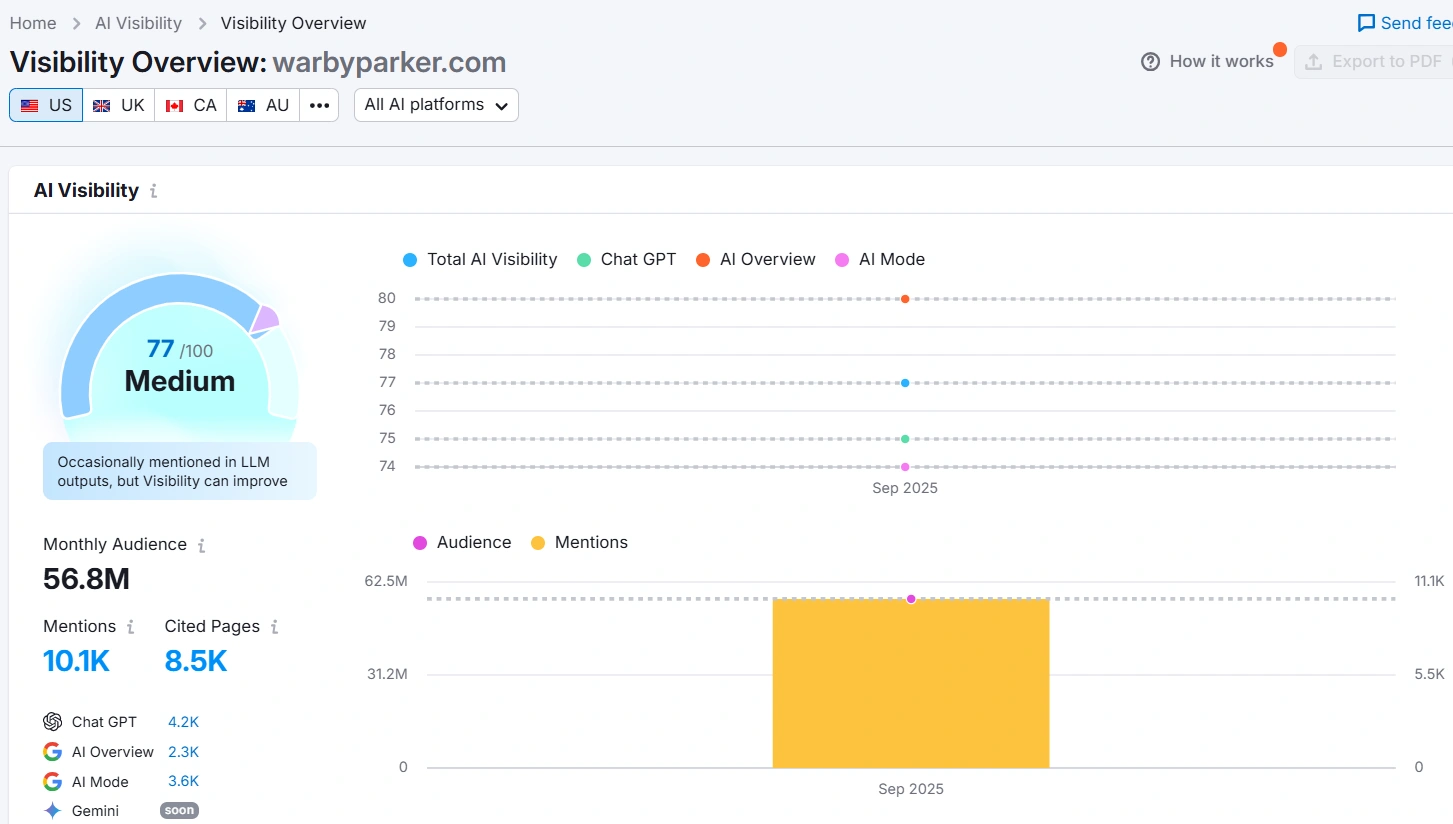
Semrush has transformed into an AI SEO ecosystem, monitoring brand visibility across AI engines like ChatGPT, Perplexity, and Google AI Overviews. The Copilot feature offers personalized SEO recommendations by analyzing site audit, backlinks, and keywords. Its Content Toolkit provides AI-optimized articles that account for both ranking and AI citability.
Key Features:
- AI visibility tracking
- Personalized recommendations from Copilot
- Keyword Magic Tool with semantic clustering
2. Surfer SEO
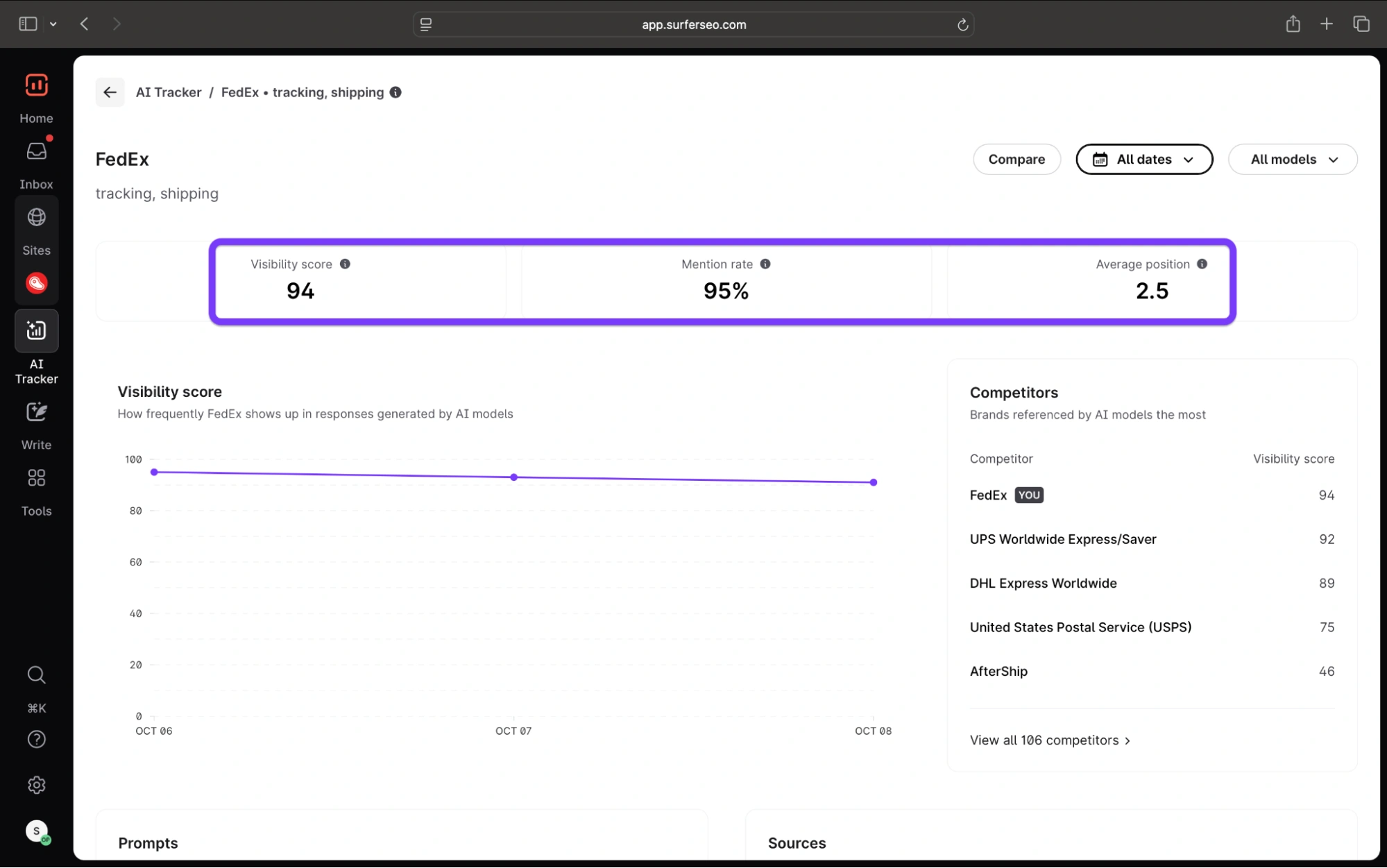
Surfer specializes in content optimization. The Content Editor analyzes top-ranking SERP results, offering NLP-based suggestions for keyword usage and content structure. Surfer’s Topical Map feature helps visualize topic clusters for building long-term authority. The Grow Flow assistant automatically identifies emerging keyword gaps.
Key Features:
- NLP-based content optimization
- Topical mapping for authority building
- AI Outline Generator
3. SE Ranking
SE Ranking integrates AI search visibility tracking directly into its platform, monitoring brand mentions across AI engines. Its traffic forecasting feature uses predictive modeling to adjust forecasts based on fluctuations in search volume and CTR. The platform also supports multi-market tracking with a database of 5.9 billion keywords.
Key Features:
- AI visibility tracking
- Traffic forecasting
- 5.9B keyword database
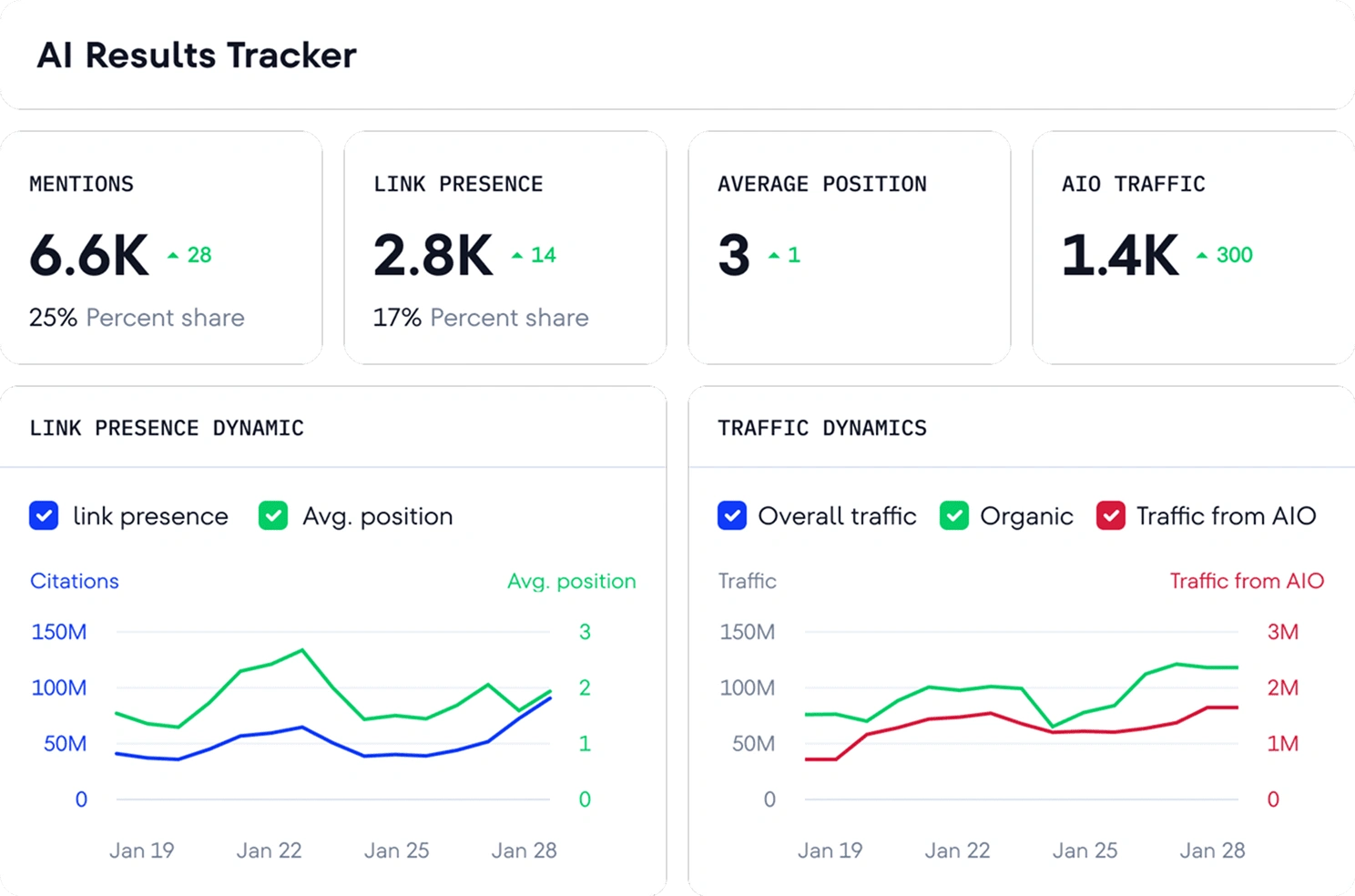
4. MarketMuse
MarketMuse excels in content strategy, using AI to identify content gaps and prioritize investments based on ROI. The First Draft feature generates AI-powered content briefs based on keyword research and competitor analysis. MarketMuse also offers competitive topic cluster mapping to uncover areas where competitors have a stronger presence.
Key Features:
- Topic modeling and content gap analysis
- ROI-based content prioritization
- Competitive intelligence for content expansion
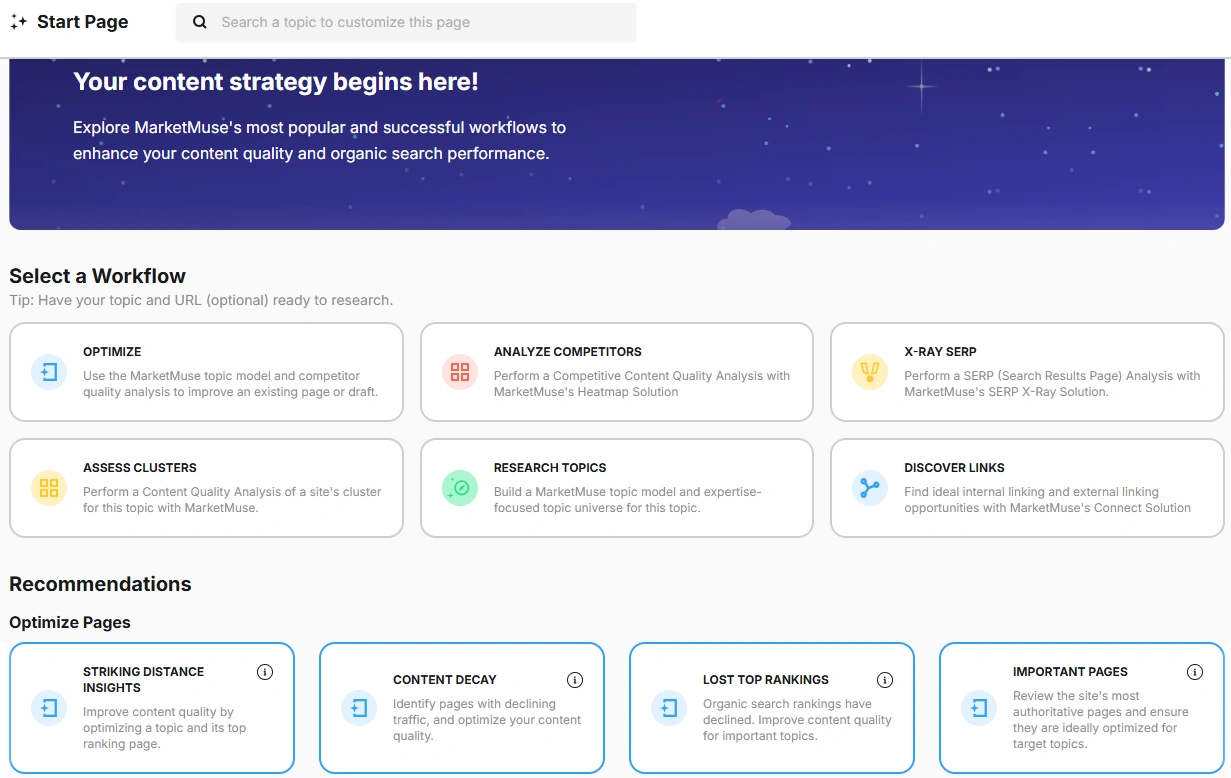
5. Clearscope
Clearscope offers straightforward content optimization, using Google NLP integration for semantic analysis. The platform’s real-time grading system helps content teams ensure their content meets SEO standards without getting bogged down in excessive metrics.
Key Features:
- Google NLP integration for semantic analysis
- Real-time content grading
- Google Docs and WordPress integration
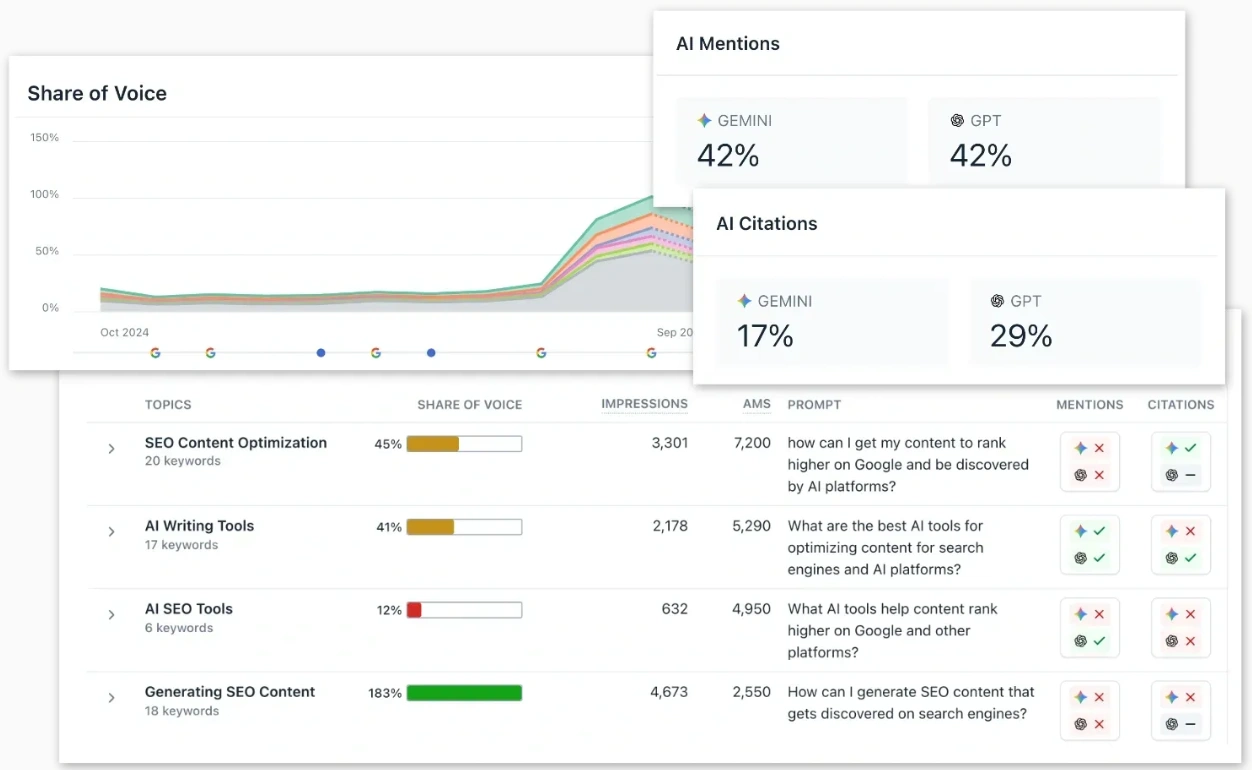
AI Search Optimization Tools Compared: Pricing, Ratings, & Best Use Cases
How to Choose the Right AI Search Optimization Tool
Start with the job, not the feature list. Most teams overbuy because they compare platforms before defining the problem.
Work through these five questions in order.
1. What is the actual gap?
Content optimization, technical SEO, and AI visibility tracking are three separate problems. Name yours before you shortlist.
2. Which engines does it track?
Coverage varies. Some tools monitor ChatGPT and Perplexity only. Others include Gemini, Claude, and Google AI Mode. Check the list against where your buyers research.
3. Will it fit your stack?
Look for native integrations with your CMS and analytics. A tool that needs manual export loses its value within a quarter.
4. Can your team run it?
Sophisticated platforms fail when nobody owns them. Match the tool to the skill level of the person using it daily.
5. What is the real cost?
Licence fees are the visible number. Add onboarding time, training, and seat expansion before you compare quotes.
Run a paid pilot on one content cluster before committing. Two months of live data beats any feature comparison.
The Future of AI Search Optimization
Four shifts will define how brands earn visibility over the next two years.
- Conversational search replaces keyword search. Buyers ask full questions, not fragments. Content built around single keywords will lose ground to content that answers a query directly.
- Entity optimization becomes the ranking layer. AI engines map brands, products, and people as entities, not strings. Consistent naming, structured data, and clear relationships across your site decide whether an engine understands who you are.
- Citation replaces the click. Zero-click behaviour is now the default. Pew Research found that users click a traditional result in only 8% of searches when an AI summary appears, against 15% without one. Structuring content so LLMs can cite it now matters more than winning the click.
- Multi-modal content enters the index. Video, images, and audio feed AI answers alongside text. Alt tags that AI engines can read and clean transcripts become retrieval assets.
Choosing Your AI Search Optimization Stack
Pick one tool. Run it on a single content cluster for two months. Measure whether AI engines start citing the brand before scaling the spend.
Tools surface the gap. Tools do not close it.
Across client programmes at LeadWalnut, the pattern repeats. Platforms flag the visibility problem within weeks. Fixing it requires entity structure, consistent naming, a schema that engines can parse, and content depth that holds up against the sources already cited.
That work falls outside what any platform can deliver on its own. LeadWalnut's 4.9 Clutch rating comes from running exactly that programme for Fortinet, eFax, and Splashtop.
FAQ
Can free tools track AI search visibility?
Free tiers offer limited prompt tracking and no historical data. Most cap at 10 to 25 queries monthly. Adequate for testing coverage, insufficient for reporting or trend analysis across a full content programme.
How long before AI engines cite optimized content?
Expect six to twelve weeks. Engines re-crawl and re-embed content on their own cycles. Pages with existing authority surface faster than net-new content.
Do AI search optimization tools replace Google Analytics?
No. These tools track mentions and citations inside AI answers. Analytics platforms track sessions on your site. AI referral traffic often arrives unattributed, so both remain necessary.
Should agencies and in-house teams use different tools?
Agencies need multi-client dashboards, white-label reporting, and seat flexibility. In-house teams prioritise depth on one domain. SE Ranking suits the first case; Clearscope the second.
Can one tool cover every AI engine?
No platform tracks every engine reliably. Coverage of ChatGPT and Perplexity is standard. Gemini, Claude, and Copilot vary widely. Confirm the engine list against your buyer research before committing.



How can LeadWalnut help?

Related Articles
Why Backlinks Are Now The Primary Driver Of Brand Mentions In AI Answers
AI Content Creation That Search Engines And LLMs Trust